When a gentleman walked through an elephant camp suddenly and he spotted that the elephants weren’t being kept in cages or held by the use of chains. All that was holding them back from escaping the camp, was just a small piece of rope tied to one of their legs.

As the man gazed upon the elephants, he was completely confused as to why the elephants didn’t just use their strength to break the rope and escape the camp. They could easily have done so, but instead, they didn’t try to at all.
Curious and wanting to know the answer, he asked a trainer nearby why the elephants were just standing there and never tried to escape.
The trainer smiled and replied;
“when they are very young and much smaller, we used the same size rope to tie them and, at that age, it was enough to hold them. As they grow up, they are conditioned to believe they cannot break away. They believe the rope can still hold them, so they never try to break free.”
The only reason that the elephants weren’t breaking free and escaping from the camp was that over time they adopted the belief that it just wasn’t possible 🙂
Since the time I was a child I have been hearing ‘Don’t waste your money by investing in the stock market because it is complex to understand’ and I believed the same throughout my life until I studied deeply about this wealth creator. One thing I found which was:
In India, whenever we talk about investing, very few people use the word ‘Stock Market’. There can be two reasons behind this:
- Either they are afraid to lose the money because they still believe it as Gamble.
- Or they have already invested and gained much and now don’t want others to know about this secret.
In both of the cases, You will be unknown to ‘Stock Market’ throughout your life.
Let’s make sense. If someone is totally unaware about Mr. Market and still wants to learn and earn but safely, What would he/she do?
Option 1: Start investing with India’s most valued company (TCS) so that he/she feels a bit safe with money.
Let me tell you TCS share surged more than 75% in just one year, People still happy with 7% interest in FD.

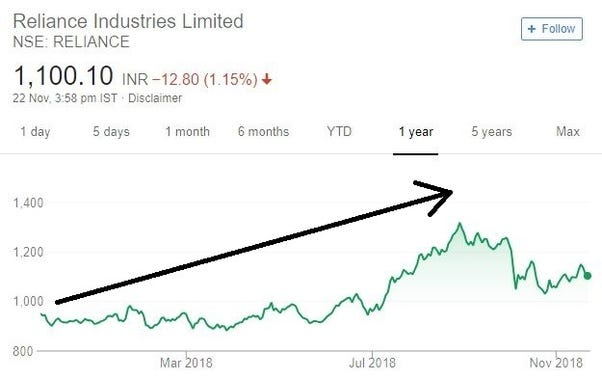
Option 2: In case someone is not interested in IT then as a beginner he/she must be investing in the second most valued company in India (Reliance).
Let me tell you RIL share surged more than 45% in just one year.
Not just RIL or TCS. Other big companies like also delivered massive returns in long term. In the case of SmallCaps and MidCaps, Returns are huge!
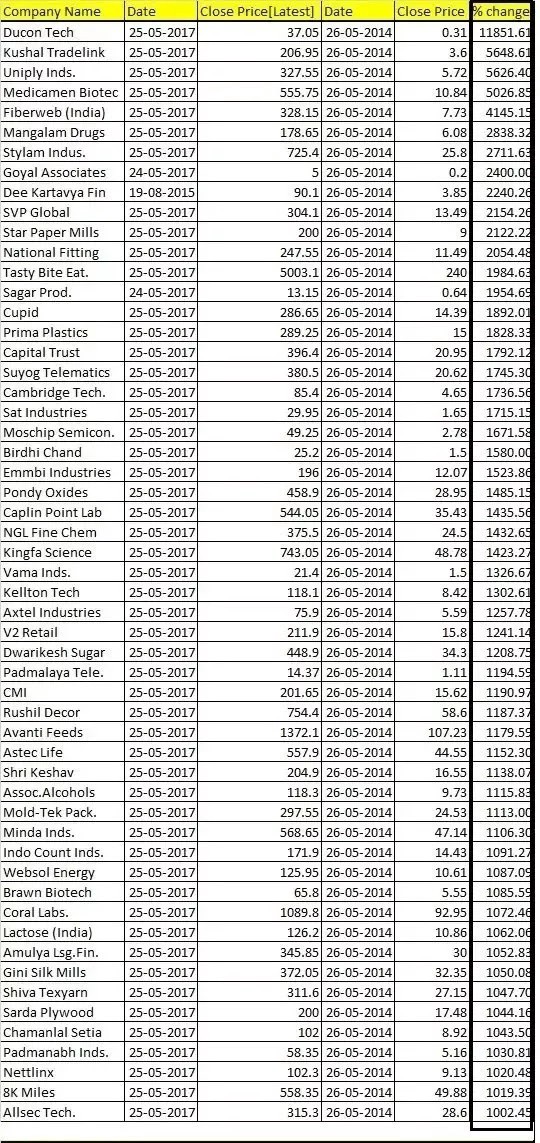
So, if people are making money in the stock market then there must be some logic or strategy behind it. Right!
To get the expertise in Selecting Stocks which can give good returns, you need to develop these three skills:
1. Knowledge:
In stock market you analyse the company and read about it thoroughly, you make analysis (Fundamental and Technical), then chose the best suitable stock to invest and expect the money to grow over time.
The fundamental analysis comprises of Company’s management, cash flows, valuations, books, debts, past performances, dividend, its short term, and long term potential to back its debts, vision, mission, scope, strategies, future prospective, key people, bottom line performance over time, earnings etc.
( You can learn here ESFA )

The technical analysis comprises of : Candlestick charts, different indicators to find out the stock current trend, entry points and exit points. Different strategies and indicators for daily trade mechanism. ( You can learn it here ESTA)
2. Practice: This is 100% sure that if you have invested without preparation, you will lose money and why not? People prepare themselves day and night, learn new concepts and read blogs and then they become capable to sustain. Some of the websites are Moneybhai or Moneypot let people trade virtual in the live market. Practice it as much as you can.
3. Discipline: Investors should not be greedy and enter the market in haste before it signals a bottom. If you have decided that if I have purchased this stock at 400 Rs. , I will exit once it will achieve my targets ( say 420 or 430 Rs.) even if goes to 500 level in short term. Remember! disciplined Trader always makes money in stocks. ‘Entry point’ and ‘Exit point’ should be pre-decided. No matter how many times it is breaking your exit point but in order to make money in the stock market you must be a disciplined Investor/Trader. Cutting your losses has always been the best strategy one must focus on.

You can use 100 EMA or 200 EMA to decide when to enter and exit but once you have decided, stick to it. ( A bit advanced but useful).
Prepare yourself in a way that even if you are jobless, unlucky enough to peruse your higher education, failed to qualify some most important exams, unfortunate enough to sit at your home because of recession, You still can generate your income from a source that has been made, discovered and created by you slowly and steadily by working hard contributing daily by some of your time learning it and never invest even a single penny until you know how it actually works. Don’t even listen to other people and their bullshit talks.
Bottom-Line: No matter how much the world tries to hold you back to learn new things, always continue with the belief that what you want to achieve is possible because you are that elephant. Believing you can become successful is the most important step in actually achieving it.
#HappyInvesting
Join my online video lectures for learning Stock Analysis here
Akshay Seth | Research Analyst (SEB Regd.) | invest@equityboxx.com
www.linkedin.com/in/akshay-seth-1b7a1668
Telegram: t.me/equityboxx
Facebook: https://facebook.com/equityboxx/
Twitter: https://Twitter.com/equityboxx
Attend Stock Market Leaning Workshop on Dec 09 in Mumbai.(Mithibai College).Book your seat here: http://equityboxx.com/workshops

Major Topics: Stock Market Introduction, Terms and Jargons, Stock Fundamentals Analysis ( Balance sheet Analysis, PL statement Analysis), Financial Ratios, Major Corporate Actions, Stock Technical Analysis ( 5 methods), Forecasting of future price of the stock, Different Valuation methods of the company, Risk Management, Taxation, Derivatives (Basics) — Options and Future trading.

 Everything you need to know about Indian economy is here. (In layman's term)