Studies have revealed that the pain of losing is twice as strong an emotion than the joy of winning. Thus, the emotion felt while losing Rs 1000 is doubly strong than that felt by gaining Rs 1000.

The culprit as being Amygdala, or ‘an almond-shaped centre in the brain that controls fear and certain other acute emotions’. This aversion is believed to lead investors to make to hasty decisions regarding money or finances. Each time one plans to start investing during a market correction or situations of market panic, one fears losing everything in a flash. However, this brings with it the possibility that investors could miss out on opportunities to generate returns that would help them achieve their long-term investment objectives.
Investing in the stock market is one of the best ways to build wealth over time. It is actually riskier to keep money in the form of cash, as wealth will then not grow faster than the prevailing rate of inflation, thereby resulting in lower spending power.
Investors can ready themselves for a market crash before it takes place. For one, a potential crash should always be taken into account when one plans an investing strategy. This does not imply that they should be needlessly conservative while investing, but it does mean choosing a strategy that takes into account what they would do in the event of a major market downturn.
In 2009, the stock market started the year with a 24.6% drop during the January to March period. It recovered to provide a 29% positive return over the course of the year.
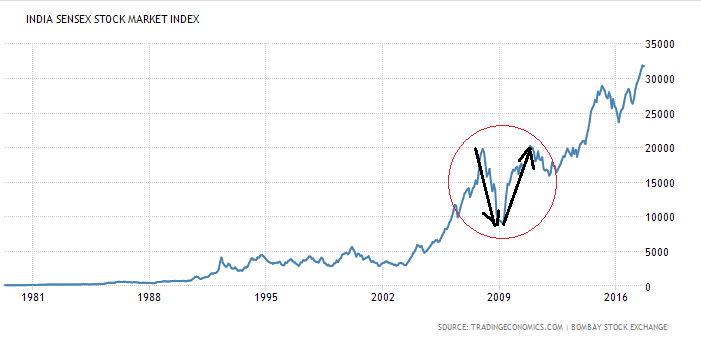
Young investors should actually welcome a market crash, as this offers them the opportunity to invest their future savings at favourable valuations. If the share of risky investments, like stocks, has risen in investors’ portfolios owing to gains earned during a bull run in the market, then moving a portion of their overall portfolio out of stocks and into safer investments can reduce their potential risk before the bottom falls out of the market.
Two common fears associated with trading:
- Fear of making losses: The fear of making losses tends to make investors hesitant to execute their strategy with regard to timing. This can often lead to the inability to take timely action with respect to new entries as well as exits. The focus should ideally be on minimizing losses, as this allows investors to stay in the game, both financially and psychologically. Investors must have the ability to bear losses. However, in the event that they cannot guard their capital against potential losses and choose to remain on the sidelines, they could miss out on potential gains.
- Fear of not being right (The best one):
Everybody is shouting to sell the stock but your analysis says to buy it.
90% of the traders will go with the crowd thinking that they must’ve researched a lot that’s why are shouting loud.
Ex-Right now most of the investors are confused about whether to buy YES BANK or not. If you see the data then, For the last three to four years they have given their complete focus on the retail segment. We can see a huge opportunity in retail because currently, their retail asset book size is close to around Rs 32,000 crore. They are aiming to grow it to anything between Rs 55,000–56,000 crore by 2019–20 (Official statement). Management changes always create short-term pain. So, why to buy it for the long term?
Also Read: Yes Bank may deliver 50% returns within 1 year. Here’s Why
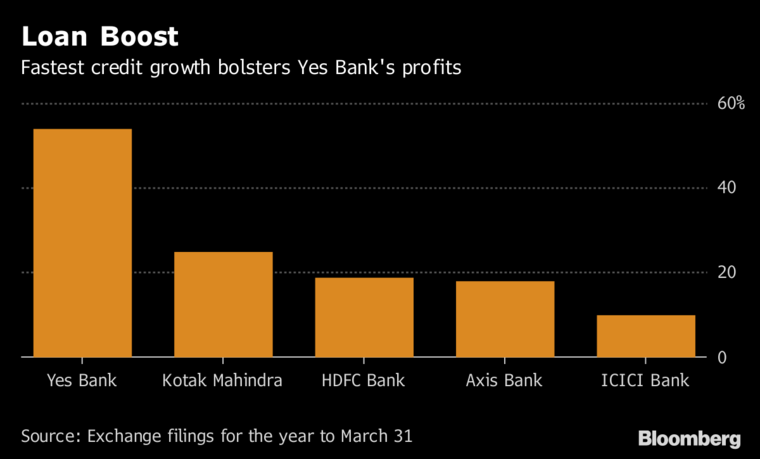
What can investors do during a market crash?
- Stay prepared to exit: ‘Entry point’ and ‘Exit point’ should be pre-decided. No matter how many times it is breaking your exit point but in order to make money in the stock market you must be a disciplined Investor/Trader. Cutting your losses has always been the best strategy one must focus on.
You can use 100 EMA or 200 EMA to decide when to enter and exit but once you have decided, stick to it.
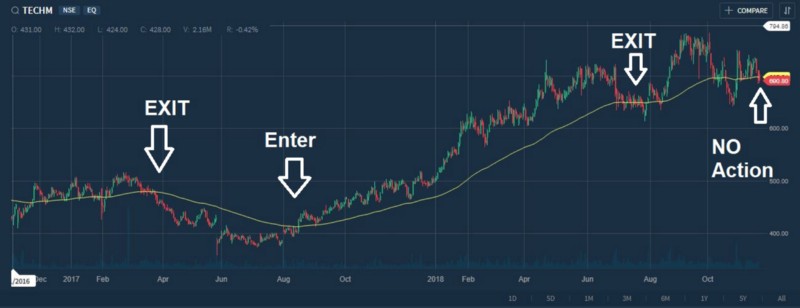
2. Don’t be greedy: Investors should not be greedy and enter the market in haste before it signals a bottom. If you have decided that if I have purchased this stock at 400 Rs. , I will exit once it will achieve my targets ( say 420 or 430 Rs.) even if goes to 500 level in short term. Remember! disciplined Trader always makes money in stocks.
3. Quick check: TodayMarket has crashed and you have with some money in invest for long-term, Whatever the stock you choose, make sure it is fulfilling this criterion.
Earnings Per Share (EPS) — Increasing for last 5 years
Price to Earnings Ratio (P/E) — Low compared to companies in the same industry
Price to Book Ratio (P/B) — Low compared companies in the same industry
Debt to Equity Ratio — Should be less than 1 (Preferably debt<0.5 or Zero-Debt)
Return on Equity (ROE) — Should be greater than 20%
Price to Sales Ratio (P/S) — Smaller value is preferred
Current Ratio — Should be greater than 1
Dividend — Increasing for the last 5 years
4. ‘The best stocks to invest are the ones already existing in your portfolio’.
You have already researched those stocks, and they are still in your portfolio only because you’re confident that it will perform well in the future. Then, why not to invest more in such stocks when they are selling even at a better discount. Look into your portfolio and find out those stocks which are currently trading at a cheaper price.
Ex- TATA MOTORS DVR is trading at 98 Rs. and most of your must have this stock in your portfolio. Why not to average this stock rather than buying any other stocks. I have researched a lot a found that just because of some weak global sales the stock is down. For the quarter ended 30–09–2018, the company has reported a Consolidated sales of Rs 71292.79 Crore, up 8.09 % from last quarter Sales of Rs 65956.78 Crore and up 1.62 % from last year same quarter Sales of Rs 70155.96 Crore Company has reported net profit after tax of Rs -1095.34 Crore in latest quarter.
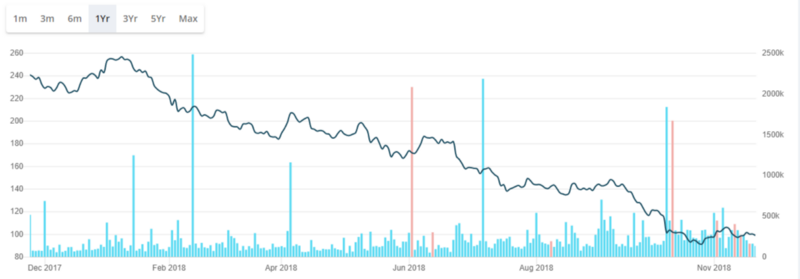
5. Patience pays the best returns: After a crash, the situation should be assessed. That is, after waiting for an appropriate length of time to let their emotions stabilize, investors should assess their portfolio’s performance and see what worked and what did not. If some investments did not perform as expected during a crash, then they should consider whether or not they should hold on to them, or replace them with better investment options.
“Individuals who cannot master their emotions are ill-suited to profit from the investment process” — Benjamin Graham
The investor should have an appropriate understanding of risks, both implicit and explicit: Perhaps investors can best prepare themselves to manage their money efficiently and build their net worth by getting a firm grasp of financial history. Investors can also acquire an understanding of the human psychology that influences the buying and selling decisions of individuals. This will improve their chances of avoiding mistakes that could impair their wealth-building process.
If you are new to stock market then start here: How do I start investing in the Indian stock market? (Complete Beginners Guide)
Hire a SEBI Registered Investment Advisor for your Stock Portfolio here
Join Offline Stock Market Learning Classes in Delhi here
Follow on Facebook here
Source: Equityboxx | Blog
#HappyInvesting
Thanks!
Akshay Seth
invest@equityboxx.com
Linkedin: www.linkedin.com/in/akshay-seth-1b7a1668


